
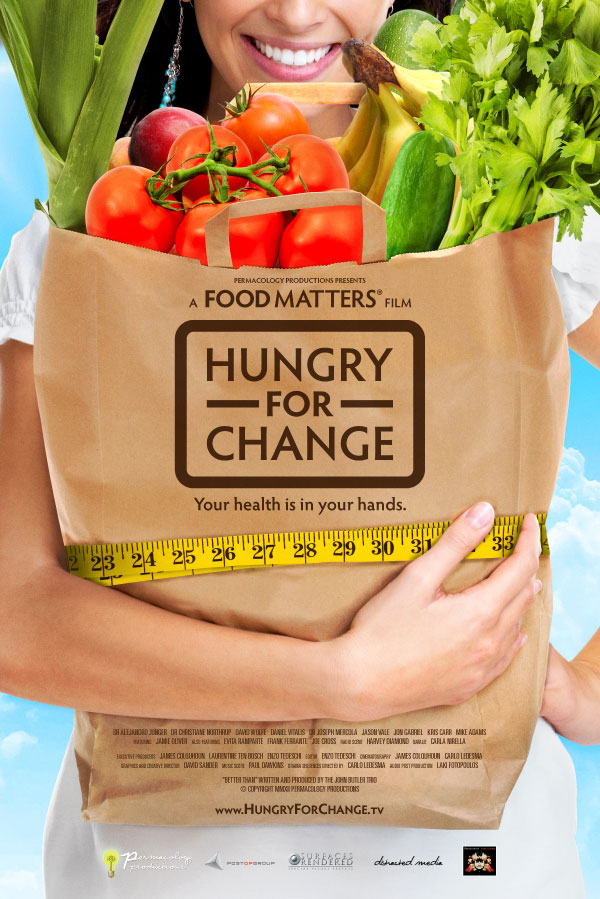
Today I finally watched the critically acclaimed 2012 documentary Hungry for Change, directed by James Colquhon and Laurentine Ten Bosch. I like this film because it gets down to the root causes of obesity, illness, bad health, and unhappiness and makes the connection between mind and body. It also talks about why diets don’t work, what is in the foods we are consuming, and gives a solution to this epidemic of unhealthiness.
I decided ahead of time to take notes while watching Hungry for Change because I knew it was going to be filled with great information. And boy was it! I highly recommend watching this documentary (which you can find on Netflix and the Hungry for Change official website), but in the mean time, here are the “cliff notes” with what I found in the film to be most significant.
OVERFED & UNDERNOURISHED
While hunter gatherer cultures consume more nutrients and less calories, Americans today are consuming more calories and less nutrients. We are fatter than ever but starving our bodies at the same time. Why is that? Because Americans are consuming processed foods instead of whole foods that come from nature. Let’s take a look at a few of the toxic ingredients that are causing widespread obesity and chronic illness, and some of my suggestions for healthy alternatives.
- MSG – A food additive used in nearly every processed food and restaurant in America. The problem with MSG is that it’s an excitotoxin, meaning that it overexcites your cells to the point of damage or death, which can cause brain damage and learning disabilities. It also causes overeating and weight gain. Case in point: MSG is used on lab mice in medical studies to make them fat. Alternative: pink Himalayan salt
- Aspartame – It’s an addictive substance most commonly found in diet soda. Aspartame causes neurological damage and weight gain, yet it’s marketed by diet soda companies as a “healthy” alternative to regular soda. Alternative: Stevia

- Fat/Fat Free Foods – If you see “fat free” on a food label, that usually means loaded with sugar because they have to make up for the taste. And sugar is what really makes us fat. Low fat foods leave you hungry because your body needs good fats, NOT fats like soybean oil, corn oil, or canola oil. Partially hydrogenated oils are the worst kinds of fats and are used in many baked items and margarine spreads. Healthy fats are plant based. Alternative: avocados, chia seeds, flax oil, coconut oil
- High Fructose Corn Syrup – Created by Japanese scientists in the 1970’s, it reduced production costs, but fructose (or “fruit sugar”) is highly addictive and changes brain chemistry. In the 1900’s, children consumed about 15 grams of fructose a day, which is less than 1 ounce. Presently, children consume about 70-80 grams of fructose a day and some children consume up to 120-150 grams a day, which is 10x the amount in 1900. Alternative: maple syrup, coconut palm sugar
Take away: Read the ingredients labels on foods! Be careful of ingredients that are plant derived but have been chemically altered, like high fructose corn syrup.
SUGAR MAKES YOU FAT. NOT FAT.
Stay away from the tempting fluffy carbs like bread because it turns to sugar in your body just moments after eating it. We have to expand our definition of “sugar” to include: breads, pasta, cereal, rice, potatoes, corn, waffles, pancakes, and so on. Unfortunately, most breakfast foods contain carbs aka sugar. And a carton of milk today can contain as much sugar as one can of soda! (Yet another of the many reasons to just cut dairy out completely!)
In America, we eat about 150 pounds of sugar per year, per person and 79 pounds of high fructose corn syrup. That equals 22 teaspoons of sugar a day. The more sugar we consume, the higher the increase of chronic disease.
Sugar is a drug, just like alcohol, because you must increase the dosage to get the same euphoric effect as the first time you bit into that cupcake or candy bar. And every processed food contains some form of sugar.
Take away:

DIETS DON’T WORK
Diets don’t work because they’re temporary. 90-95% of people that go on diets not only gain the weight back, but they gain more weight, because they’re so happy to be eating again that they don’t eat intelligently.
Diet involves the word CAN’T.
But if we change our way of thinking…
“I want that but I can’t have it.”
to
“I CAN have it but I don’t want it.”
This little adjustment creates a massive paradigm shift. When changing to a healthier lifestyle, keep the focus on adding the good stuff, not taking away the foods you love. Eventually the good stuff will crowd out the bad stuff. You’ll feel so good eating the good stuff that you won’t miss the bad stuff!
Take away: Use positive thinking to create a healthy lifestyle. Don’t diet. It’s not sustainable.
TIME TO DETOX
We’ve created over 75,000 synthetic chemicals since 1940. Scary. In 2009, tests found more than 200 chemicals in newborn umbilical cord blood. Even scarier. There’s good news and bad news. The bad news is that these synthetic chemicals are in the food chain and they’ve contaminated every single creature on the Earth. The good news is that we can clean up the mess by working with nature and it’s natural laws. That means eating organic whole foods and staying away from processed foods.
When we eat processed foods, the chemicals cling to the fat in our body and create more fat. It’s possible to burn off this toxic fat, but first you must get to the root of the problem and stop consuming the toxins. Only the body can detoxify itself, provided there aren’t more toxins coming in.
How do we detox? Here are the key words: good food, good water, good air, and sunlight.
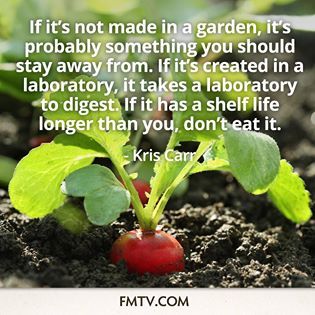
Carr goes on to say “The simpler I eat, the healthier I get.” I think those are definitely words to live by.
So where do you start? With green vegetables. Vegetables are the most beneficial food group we can have access to and most people aren’t getting enough. They contain everything we need to be healthy (dispelling those myths that vegans can’t get the all the nutrients they need just from plants 🙂 ).
Detox must-haves: organic veggies, chlorophyll rich foods, parsley, cilantro, gelatinous plant foods like chia seeds, aloe vera, & seaweed.
Juicing is the ultimate “fast food” – literally – because it only takes 15 minutes for it to absorb into your cells. Quick and easy digestion. Smoothies are an even better option in my opinion, because you get all the benefits of juicing PLUS fiber, which is extremely vital for health. Juicing is just that, the juice from the fruit or vegetable. But you use the entire food with smoothies, which means the fiber and other nutrients remain intact.
Off topic. My favorite quote of the movie: “I thought vegan was a planet.”
Take away: Green vegetables rock.
BENEFITS OF DETOX & HEALTHY EATING
Within just a few days of detoxing from a processed food lifestyle, people experienced these “side effects” of healthy eating: weight loss, increase in energy, and clearer skin. Some people have even cured their cancer with a plant based diet.
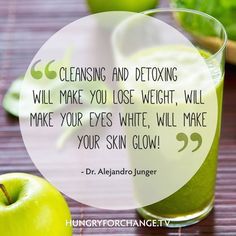
The skin is a true symbol of your health because it’s the last place in your body that gets nutrition. If your skin is glowing and healthy, then you know the rest of your body is too.
Beauty foods: olives, cucumbers, radishes, hemp seeds, aloe vera, coconut products, and sauerkraut
Beauty minerals: manganese, iron, sulfur
While we’re on the topic, cosmetics and other beauty products are chock full of synthetic chemicals. Putting them on your skin is just as toxic as ingesting them:
- Picking Humane Beauty Products
- Be Beautiful Inside And Out, Part 1
- Be Beautiful Inside And Out, Part 2
- Be Beautiful Inside And Out, Part 3
Take away: Outer beauty depends on inner beauty and nourishing your body.
EMOTIONAL HEALTH
Obesity is not the problem. It’s the “solution” to chronic stress and other emotional issues. These issues affect your food choices. “If you’re upset, don’t eat.” Otherwise, you’re trying to fill a void with food that can never be filled with food.
Stress also causes your body to gain weight as a protective measure. Historically, when humans depended on fight or flight for survival, like in the case of famine or not having food readily available, the stress caused the body to instinctively gain weight to avoid starvation.
Tip: Deep sleep will neutralize excess cortisol, which is the stress hormone. So will exercise. And laughter.
Visualization for weight loss (or anything your want). Visualization is a language you can use to talk to your subconscious. Your body doesn’t understand your language and visualization is a great tool to break down that barrier. Look at a picture of yourself that you admire and want to look like again. Look at it for 30 seconds then close your eyes and imagine yourself in that body. Get as descriptive as possible.
Take away: “Whatever you hold in your mind on a consistent basis is exactly what you will experience in your life.” Anthony Robbins
SELF LOVE, BABY
When shifting to a healthier lifestyle, love is important. Love is safety. No love = stress and holding onto the fat. The concept of loving yourself is the key to all of this because if you don’t love yourself then nothing else discussed here is sustainable. Self love is the foundation. If you don’t have a strong foundation, then your building will eventually crumble to the ground.

Scientifically proven health benefits of self love: better hearing and eyesight, lowers blood pressure, increases pulmonary function, and many others.
Take away: If everyone loved themselves, healthcare costs would decrease.
TRUST NATURE
To wrap up, here are the 3 questions you should ask yourself:
- Where does my food come from?
- What went into the food in terms of attitude, care, and compassion?
- What is my intention for eating this food? Is the food to support me for a good cause or is it just to entertain me?
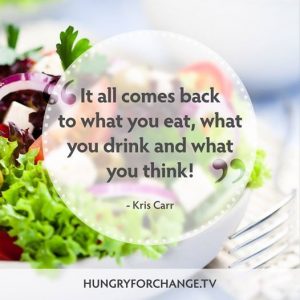
Your body is designed to be healthy. Health is the natural state. Be good to your body.
Jillian ♥
Photo credit for the 5 Dangers of Diet Soda:
http://dietsplan.atspace.eu/detoxification.html
Love the documentary! I am confused on one point though.. When talking about fructose in the documentary, it is said eating corn is fine and healthy in the same way that drinking coca leaf tea is fine and has benefits(when comparing sugar to cocaine)… But then later on, corn and potatoes are grouped with pancakes, fluffy white bread, etc… Can you give some more insight on this? Are you saying potatoes and corn should be avoided in the same way you should avoid white bread or pasta?
Hi Damien! I would have to review those specific parts of the documentary again since it’s been several weeks since I last watched it, but here are my initial thoughts to your question: When eating organic and non-GMO corn & potatoes in moderation, they have great health benefits. They’re grouped together with pancakes and fluffy white bread because of the carbs and starches and all those other yummy things that skyrocket insulin levels. I personally don’t eat any corn because it’s one of the top genetically modified foods and I don’t care for the taste of it. And I stick mainly to sweet potatoes because they have more nutrients than white potatoes. So if you enjoy corn and potatoes, I would say don’t avoid them, just try to buy organic & non-GMO, pair them with other healthy foods, and eat them in moderation. I hope that helps! 🙂