

It seems like everyone has been talking about this recent documentary called What the Health. There’s a good amount of controversy surrounding it and I wanted to see what all the fuss was about. In a nutshell, it brings to light how the meat and dairy industries are in collusion with the government and big business to control how people eat, even though it’s making people chronically ill and devastating the environment. This is not news to me, so I was definitely interested to see what this plant-based documentary had to say on the topic.
It appears that many of the people that have issues with What the Health do so because of the way the statistics in the film are presented, the comparison that the effects of meat are just as harmful as smoking cigarettes, “gotcha” journalism tactics, the claim that sugar isn’t the cause of diabetes, and the fact that tons of people just plain don’t like vegans because of stereotypes or otherwise. What’s interesting is that most of the negative criticism surrounding the film never touches on the bigger picture. Critics don’t refute or discuss the cruelty to animals presented in the film, the devastation to the environment, or how powerful the government is in influencing what we eat. Instead, people nitpick about the smaller controversies in the film. For me, the bigger picture is way more important to discuss. Although I do have a couple of questions surrounding information presented in the film, I feel open minded about the message of the documentary and I hope it causes other people to open their minds to new possibilities as well.
Here’s some interesting information from What the Health, why I think it matters, and how our food choices affect the planet.
Let’s kick things off with a few statistics:
- 350 million people worldwide with diabetes
- 1 out of 4 deaths caused by cancer
- Cardiovascular disease is the leading cause of death worldwide
the real cause of diabetes and other chronic diseases
One of the controversial issues in the film is the claim that sugar and carbs aren’t the cause diabetes, but rather, fat. From the way it’s explained by Neal Barnard of PCRM, the buildup of fat in the arteries doesn’t allow the sugar to be absorbed and the body is unable to regulate it properly. In this way, sugar is indeed a factor of diabetes, but indirectly. Even if this is accurate, it’s clear that sugar is still not good for you, but it’s not quite the enemy we’ve come to believe it is. In fact, it almost appears that sugar has become the scapegoat to take the focus off the fact that meat and dairy are causing the buildup of fat that leads to diabetes. I haven’t yet done my own research into the matter, but I’m interested to see what other experts backup the claim that fat causes diabetes, not sugar. This is a totally new concept to me, one that I’m still trying to wrap my head around.

The documentary does mention a Harvard study that says one serving of processed meat daily raises the risk of diabetes by 51%. This was one of the controversial statistics. It’s pretty clear, at least to me, that meat and dairy are inflammatory foods for the human body. Whether the fat from meat and dairy causes diabetes or not, the inflammation associated with them sure doesn’t help a person who already has diabetes. What’s interesting is that the American Diabetes Association promotes multiple recipes on their website that contain meat, including bacon wrapped shrimp.
According to the film, many children in America today already have fatty streaks in their arteries by the age of 10. These fatty streaks are the beginnings of many problematic diseases, including heart disease. We tell children to drink milk because it’s good for them and will make them strong, but what many people don’t know is that dairy is the #1 source of saturated fat. Children also consume lots of processed meats, fast food, hamburgers, and cheese. So it’s interesting that the American Heart Association website includes “healthy recipes” containing beef, eggs, steak, poultry, and pork, which are some of the most inflammatory foods a person can consume.
Speaking of poultry, clever advertisers have created the myth that poultry is somehow a healthier choice than red meat and pork. In fact, poultry has extremely high levels of carcinogens. Furthermore, processed meats are classified as a Group 1 carcinogen, along with tobacco smoking, asbestos, and plutonium. Red meat is a Group 2 carcinogen. Even though this information has been around for decades, the American Cancer Society still recommends these carcinogenic meats as “healthy snacks” despite the World Health Organization linking these very meats to cancer. Similarly, even though dairy has been linked to breast cancer, the Susan G. Komen yogurt campaign is still going strong.
something smells fishy
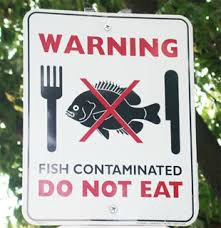
What about fish, you ask? When I stopped eating animal product, fish was the easiest to give up. Despite being advertised as a healthier alternative to red meat, most fish contains mercury, pcbs (highly toxic industrial compounds), saturated fat, and cholesterol. People tend to forget that the fish they eat, even the “wild” caught fish is all farmed just like chicken, pork, and beef. This means that every fish is fed pesticides and herbicides, as well as antibiotics and antifungals because they get sick living in crowded fish farms. All of these chemicals accumulate in their flesh and therefore are consumed by the person that eats it. Plus, if you stop and think about how enormously polluted the ocean is today due to oil spills, radiation spills, trash and garbage, chemicals, etc., every time you eat fish you are eating all of that. No, thank you.
Here’s a few more, shall we say, interesting facts…
- Dioxin exposure (chemicals that create air pollution in the environment) are found in 93% of animal products
- Eating organic animal products like meat and dairy do not protect against chemicals and toxins
- Most people worldwide are lactose intolerant
- All milk contains pus
- Casein, found in cheese and other dairy products, is addictive
- 95% of chicken breast, 90% of ground beef, and 88% percent of pork contain fecal contamination
corruption of our health by big business
So, what’s going on then? Why are people in America so obsessed with consuming meat and dairy, even though there’s so much evidence to support the devastating health effects? In What the Health, director Kip Andersen shows the shocking correlation between big business and health. He looks into the major sponsors of health organizations and it’s pretty hypocritical.
SPONSORS of…
American Diabetes Assocation
- Dannon
- Kraft (which includes Oscar Meyer, Velveeta, Lunchables, and more)
- Bumble Bee Foods (canned meats)
American Cancer Society
- Tyson
- Yum! (owners of Pizza Hut, KFC, and Taco Bell)
Susan G. Komen
- KFC
- Dietz & Watson (processed meats)
- Yoplait (they’ve contributed a whopping $35 million)
American Heart Association
- Texas Beef Council
- South Dakota Beef Industry Council
- Kentucky Beef Council
- Nebraska Beef Council
- Colorado Beef Council
- Idaho Beef Council
- Cargil
- Tyson
- Unilever
- Dairy Max
- Subway
- Dominos
- Farmland
- ConAgra Foods
- General Mills
- Nestle
- Mars
- Kraft
- Kelloggs
- and more…
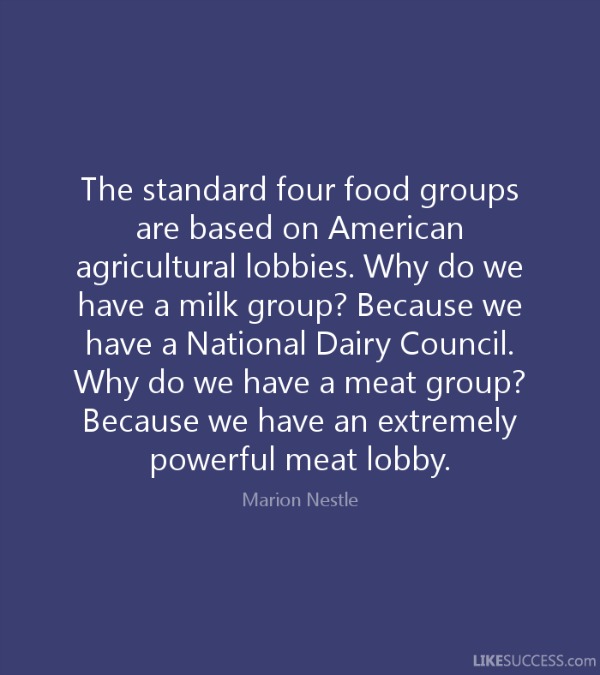
The beef industry pretty much owns the American Heart Association! Why would these companies that produce meat, dairy, and other types of unhealthy foods spends so much money to sponsor health organizations? Because they know if they contribute money, the organizations will promote their unhealthy products instead of warn people against them. It’s extremely telling that the U.S. Dietary Advisory Committee, which creates the dietary recommendations for our country, receives funding from McDonalds, the National Dairy Council, American Meat Institute, American Egg Board, Coca Cola, The Sugar Association, Dannon, and more. The companies funding the committee that persuades people how to eat are some of the very same companies that are making people so sick.
Many of the food campaigns and health studies that are done in this country are funded by the dairy, egg, and meat industries. Because their results are biased, they end up giving the public confusing information. “Doubt is our product” proclaims one exec.
Meat and dairy companies will target anyone, especially innocent kids that are easily persuaded by marketing and advertising. School cafeterias are full of unhealthy foods like hamburgers, chicken nuggets, french fries, tater tots, and vending machines stocked with sodas and junk food. These foods become much more appealing to them than healthy foods, which is the start of an unhealthy food lifestyle that leads to chronic disease. But the meat and dairy industries secure their businesses by spending over half a million in promotion and at least $138 million in lobbying Congress, although this number is probably much higher but companies find ways around recording this info. Furthermore, anyone who tries to blow the whistle on shady practices or inner-workings of the meat and dairy industries are classified as terrorists.
big pharma joins forces with meat & dairy
The pharmaceutical industry has found a way to piggyback off this exploitation. Since people are getting so sick from the foods they eat, big pharma is using it as an opportunity to pump people full of pills, and they’ve created a $1.5 trillion industry from it. Similarly, health organizations also accept funding from big pharma. Here’s just some of the sponsors…
American Diabetes Association
- Merck
- Pfizer
- Lilly
- Johnson & Johnson
- Sanofi
- Glaxo Smith Kline
- Astra Zeneca
- Janssen
- Boehringer
- Ingelheim
American Cancer Society
- Merck
- Pzifer
- Lilly
- Johnson & Johnson
- Abbvie
- Abott
American Heart Association
- Merck
- Pfizer
- Lilly
- Sanofi
- Astra Zeneca
- Glaxo Smith Kline
- Amgen
- Bayer
- Chiesi
Pharma also spends over $230 million on lobbying. The pharmaceutical industry is very deceiving because they lead people to believe that they need to take pills for the rest of their lives to alleviate chronic diseases, that there is no alternative other than surgeries and procedures that may or may not help. The problem with this is that pills, surgeries, and procedures are surface level; they don’t get to the root of the problem. What caused the chronic disease in the first place? (I’ll discuss this below) Pills also don’t prompt people to consider prevention from further disease. We focus on treating disease instead of preventing it. Expensive pills and procedures may smooth over symptoms temporarily and with extended use, but in most cases, people don’t improve or feel better.
Drug companies also generate high volumes of revenue from selling antibiotics to livestock farmers. 80% of livestock are given antibiotics.
the importance of diet and lifestyle
Another statistic given in the documentary is that 70% of deaths are lifestyle related and therefore largely preventable. Many diseases that are deemed “genetic” are actually food and lifestyle choices that have been passed down from generation to generation. Of course, there really are genetic diseases out there, but even these cases can be controlled and possibly prevented with the proper diet and lifestyle. Similarly, it makes me wonder if the fact that men have shorter lifespans than women is due to the different rates of meat consumption. Meat is considered a masculine food and therefore more rapidly consumed by men, and in correlating to the high rates of chronic disease it causes, could explain why men have shorter lifespans.
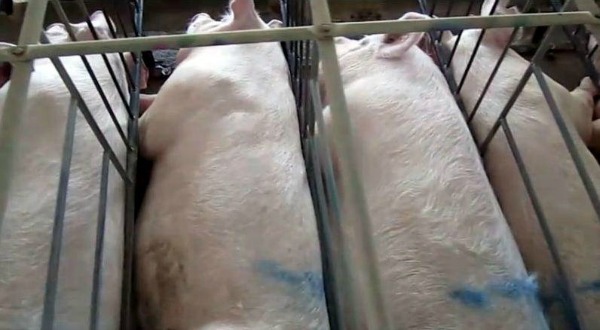
Even though What the Health focuses primarily on the health effects of the meat and dairy industries, I appreciated how they tied in the effect these industries have on human rights. Most people don’t realize the negative effects that are wrought on the communities around them. In the film, the crew travels to Duplin County, North Carolina to visit a low income neighborhood located next to a hog farm. Aside from the gut wrenching stench that pervades the neighborhood, the waste from the hog farm gets pumped into the local water system. Animals create waste, and that waste has to go somewhere, especially with the extremely high volume of factory farming going on in the world. To give you an idea, 10 million pigs create the waste of 100 million humans. In most cases, waste from these farms gets sent to low income and minority communities who don’t have the resources to fight against these harmful practices. People in these neighborhood aren’t just getting sick from drinking the contaminated water, but from eating the animal product itself. This particular hog farm in North Carolina grinds up the bodies of any dead hogs and incorporates it into their regular hog feed. Pretty sickening.
I think some of the misinformed importance placed on eating meat is due to “protein panic,” as I like to call it. People are terrified of protein deficiency, which is an issue that was created out of thin air by the meat and dairy industries to get people to consume more animal product. Most Americans consume about 100 grams of protein daily, but only need to consume half that amount. What Americans really should be concerned about is fiber deficiency. We need about 30 grams of fiber daily, but most people only consume half of that. Fiber is what pushes toxins out of the body. People are getting too much animal product and not enough plants. Plants contain fiber and protein, which is why human bodies were made to consume plants. Interestingly, human milk has the least amount of protein of any milk in mammals, which to me is more evidence that protein shouldn’t be the main concern of human diets.
final thoughts
Although What the Health may raise some eyebrows over it’s subject matter, especially among the more carnivorously inclined, I think the overall message is an important one. People should be aware of where information comes from, especially information that affects their health. I personally don’t trust information coming from organizations that are funded by the meat and dairy industries. These industries don’t care about peoples’ health and happiness, they care about generating as much revenue as possible. So much so, that they’ve infiltrated our system of government, the very government that is meant to have our best interest. People have criticized What the Heath for having a “vegan agenda,” but the meat and dairy industries have the pushiest and most harmful agenda of all and hardly anyone seems to be outraged by it. To me, this just shows a job well done by the meat and dairy industries of so deeply ingraining a lifestyle into our culture that is based off of animal product consumption. I think many people don’t like the idea that the lifestyle they enjoy is wrong on so many levels, and don’t want to have to change or accept responsibility for their choices. Ultimately, it’s up to each individual person to decide how important their health is to them and what they are willing to do to be healthy. But we must also remember that the way we eat doesn’t just affect us, it triggers a ripple effect throughout our country and even throughout the world.
You can watch What the Health on Netflix or check out their website to get more info. There’s a page on the website dedicated to supporting the facts used in their film with links and resources. This isn’t the only documentary out there presenting this kind of information. More and more films are being made on the benefits of the vegan lifestyle and how devastating the meat and dairy industries are to our health, to animals, and to the environment.
Jillian
Photo Credit:
http://www.imdb.com/title/tt5541848/
http://www.stylecraze.com/articles/very-unhealthy-foods-and-drinks-you-should-avoid/#gref
http://likesuccess.com/topics/11466/council/5
http://whqr.org/post/coastline-hog-farming-nc-farm-families-and-environmental-justice#stream/0
Leave a Reply